The first minutes after a pipe lets go
Most of the damage from a burst pipe comes from the water that runs after the break, not the break itself. A half inch line under normal household pressure can release hundreds of gallons in an hour. That is why the shutoff valve matters more than anything else you can do in the first five minutes.
The main valve is usually at the front of the house near the meter, at a hose bib on the side wall, or in the garage near the water heater. Turn it clockwise until it stops. If it will not turn, tell the dispatcher, because a stuck valve changes what the technician needs to bring.
Before the plumber arrives
Shut the water
Close the main valve. Then open the lowest faucet and the highest faucet to bleed the system.
Cut the power if wet
If water reaches outlets, light fixtures or the panel, switch off those breakers from a dry spot. Do not stand in water.
Protect what you can
Move furniture and electronics, lift rugs and place towels. Photograph everything before cleanup for your insurer.
Note the location
Tell us where water first appeared and any hissing, banging or pressure drops you noticed earlier.
Why pipes burst in Southern California homes
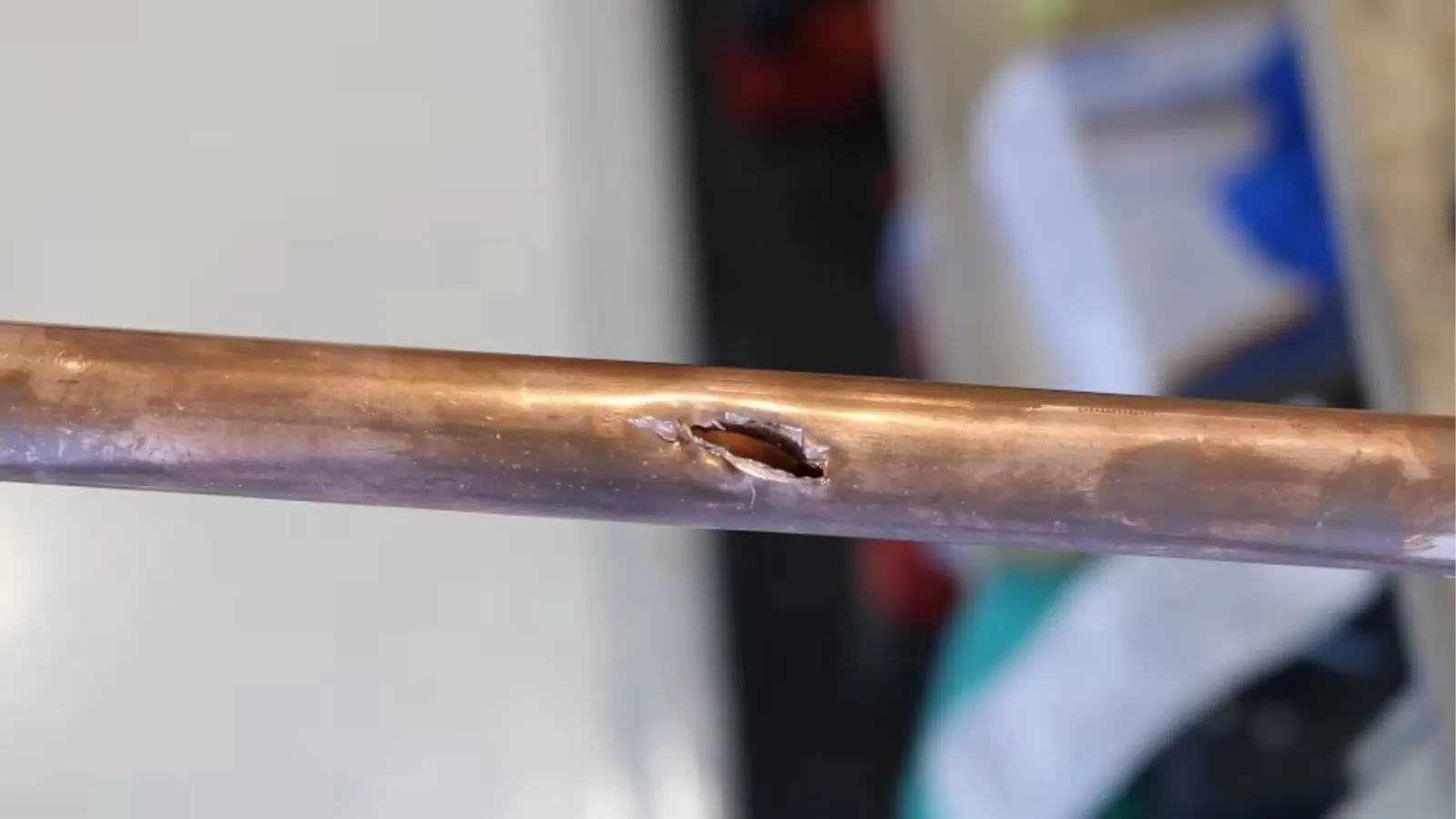
Freezing is rare in Orange County, so Cypress bursts usually come from age, corrosion, high pressure or ground movement. Galvanized steel lines from the 1950s and 1960s rust from the inside. Copper develops pinhole leaks that grow into splits. Pressure above about 80 psi strains every fitting in the house, and a failed pressure regulator is a common hidden cause.
Cypress grew from dairy farmland into a suburb during the 1960s, and much of the housing from that era still has original supply plumbing somewhere in the walls or under the slab. A burst in one section often tells you the rest of the line is close behind.
| What we find | What it usually means | Typical response |
|---|---|---|
| Single split in newer copper or PEX. | Isolated damage, often from a nail, impact or a bad fitting. | Cut out and replace the section. |
| Pinholes along a copper run. | Internal corrosion across the whole line. | Plan a larger section or a repipe. |
| Rust and thin walls on galvanized pipe. | End of service life. | Replace the run, discuss whole house options. |
| Leak inside a slab or under a floor. | Buried line failure. | Pressure test, then slab leak repair. |
Water running right now?
Close the main valve, then call. The dispatcher can talk you through it.
What shapes the cost of a burst pipe repair
We explain the price before any cutting begins. The usual drivers are:
Standard homeowners insurance often covers sudden water damage, though not always the pipe itself, so ask your carrier early. For a price on your own break, call (562) 488-9614.
Standards and checking a plumber's license
Plumbing work for burst pipe repair in California is governed by the California Plumbing Code, and plumbing contractors must hold a license from the Contractors State License Board.
You can look up any contractor on the CSLB License Check tool at cslb.ca.gov, or call 1-800-321-CSLB (2752). Ask for our license details when you call and check them yourself before work begins.
After the repair: drying and the next steps
We repair and test the line, but drying the structure is a separate job. If walls, carpet or subfloor are wet, a water damage contractor should dry them within a day or two to stop mold. Our crew can point out where moisture is likely to hide.
If the break came from an old galvanized or pinhole copper line, ask about a leak detection check on the rest of the system. We cover Los Alamitos, Stanton and Buena Park from our Cypress base.
Common questions
Yes. The line is staffed around the clock, and after hours callers get shutoff guidance first. A plumber is dispatched as soon as possible.
Check near the water meter at the front of the property, on the side of the house at a hose bib, or in the garage near the water heater. Some homes have a valve at the street meter box owned by the water provider.
Many policies cover sudden water damage but not the cost of the pipe itself. Wear and corrosion are often excluded, so read your policy or ask your agent.
A simple split in an accessible pipe can be fixed in a few hours. Buried or in wall lines take longer.
Not always. If the failure was an impact or a bad fitting, a repair is enough. If the pipe is corroded throughout, repiping saves repeat failures.