
Planning an install, step by step
A good install begins before anyone picks up a wrench. The technician checks where the unit will sit, how the gas or electric supply reaches it, where the vent exits and how the relief valve will drain. In many Cypress garages the heater sits in a corner closet that was never designed for a larger unit, so the first visit measures rather than assumes.
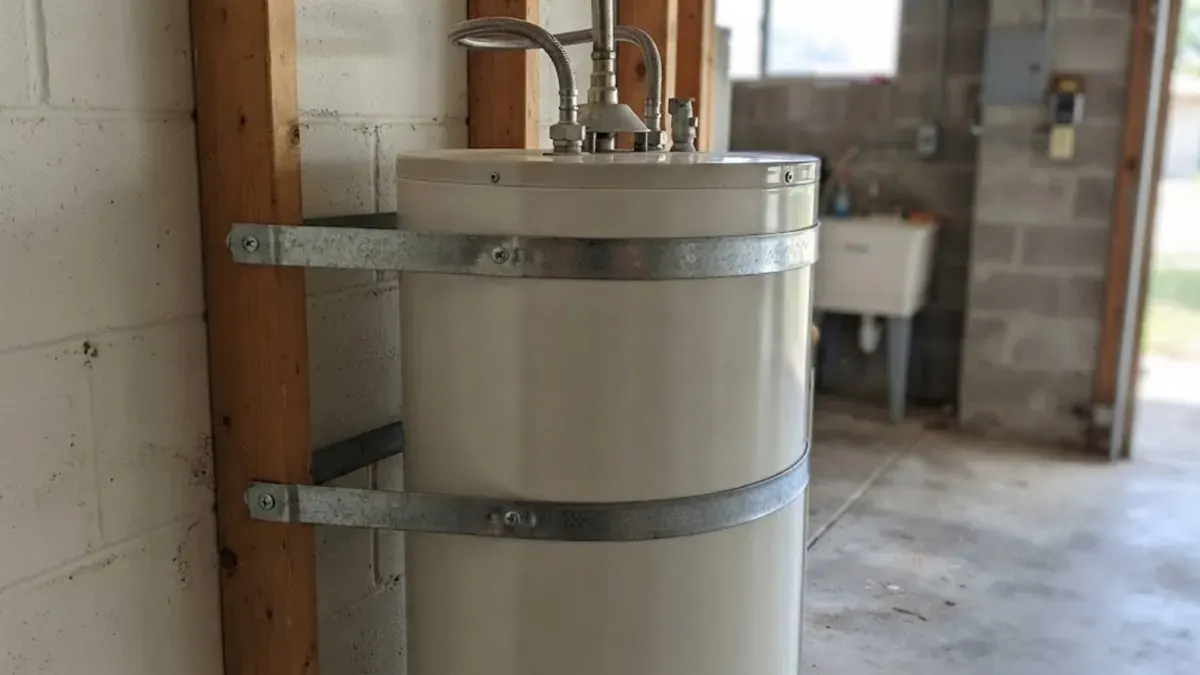
California homes also need the unit to be secured against earthquake movement. The strapping, the drain pan and the expansion control are part of the install, and they are checked again at the city inspection.
Choosing the type of unit
Pick the unit by household size and available space, not by brand names alone.
Gas tank
Familiar, reliable and usually the least expensive way to heat water when a gas line is already in the garage.
Electric tank
A fit for homes without gas, townhomes and additions where venting is difficult.
Tankless
Compact and efficient, with higher upfront cost and extra venting and gas line checks. See tankless installation.
Heat pump hybrid
Uses less electricity than a standard electric tank but needs airflow space and a suitable circuit.
Permits and inspections in Cypress
The City of Cypress Building Division lists water heaters among the appliances that require a building permit, and plumbing, gas and mechanical work also needs one. Inspections are offered Monday through Friday from 8:00 a.m. to 4:00 p.m., and the city suggests about two days of notice. Call (714) 229-6730 or email [email protected] to confirm current steps.
We schedule the inspection for you. A permitted install also protects you when you sell, because a buyer's inspector can see the paperwork.
Questions to answer before the install visit
- Is the current heater gas or electric, and where does it vent?
- How many people live in the home, and do showers overlap?
- Is there floor space for a drain pan and clear access in front of the unit?
- Do you want to keep the same fuel type or convert?
- Is the main shutoff valve in good condition and easy to close?
Hard water and your new heater
Golden State Water reports an average hardness of 237 mg/L, or about 13.8 grains per gallon, for its West Orange County system. Readings in its 2025 data ranged from roughly 63 to 369 mg/L. Ask about sediment control when the unit is installed, because mineral scale is the most common reason tanks in this area lose capacity. The water softener and filtration page covers the treatment options.
Ready to schedule an install?
Call to book a visit. We explain the price before any work starts.
Cost factors for a planned install
Installs vary more than most people expect:
Insurance does not usually pay for a planned upgrade. Call (562) 488-9614 for a price specific to your home.
Safety details that belong in every install
A new water heater is not finished until the temperature and pressure relief valve has a proper discharge pipe, the gas connection has been leak tested and the venting draws correctly. These are the quiet details that separate a safe install from a quick one.
We also set the thermostat to a safe temperature, show you where the shutoff and the breaker are, and leave the paperwork with you. If anything about the space looks risky, we say so before the unit goes in.
Standards and checking a plumber's license
Plumbing work for water heater installation in California is governed by the California Plumbing Code, and plumbing contractors must hold a license from the Contractors State License Board.
You can look up any contractor on the CSLB License Check tool at cslb.ca.gov, or call 1-800-321-CSLB (2752). Ask for our license details when you call and check them yourself before work begins.
Neighboring cities
We install across La Palma, Buena Park and the rest of west Orange County. If you are building an addition, our plumbing installation crew can rough in the water heater lines at the same time.
Common questions
Most straightforward tank installs take part of a day. Conversions and tankless units can take longer.
Water heaters are on the City of Cypress list of appliances that need a building permit, so we pull one.
Yes, removal is included.
Tank is simpler and cheaper to install. Tankless saves space and gives continuous hot water but costs more to put in.
Sometimes. The unit needs airflow, drainage and a suitable electrical circuit.